
Water heater leaking in San Diego
A water heater leaking in a San Diego home usually sits in the garage or a hall closet, so the water reaches stored boxes, the laundry area or the next room's drywall. Shut the cold supply above the tank, turn off its gas or breaker, and get the wet area dry within 24 to 48 hours.
Your call is connected with an independent local water damage company that works in San Diego. Water category: category 1 (clean water) when caught early.
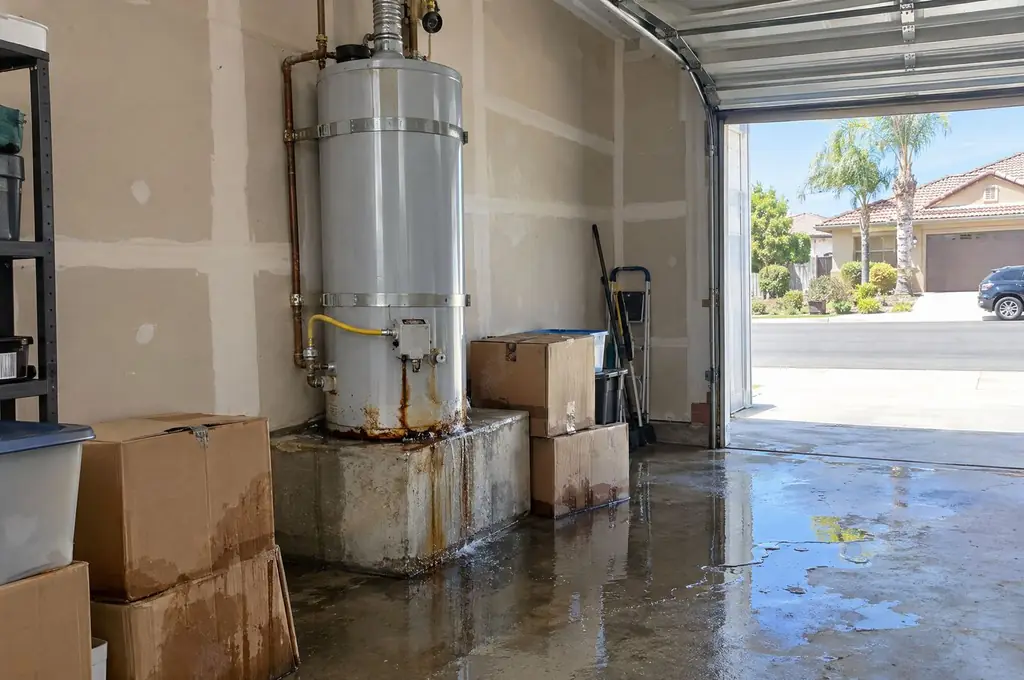
City water averages about 16 grains of hardness per gallon, and the pressure regulator that protects tanks, hoses and valves is the owner's to maintain. The same steps apply when a washer hose, a dishwasher line, an ice maker line or a toilet supply gives way.
Right now
- 1Close the cold water valve on the pipe above the water heater.
- 2Turn the gas valve to off or switch off the heater's breaker from a dry floor.
- 3For a washer, toilet or fridge line, close the valve behind it.
- 4Move boxes and anything on the floor off the wet area.
- 5Photograph the tank, the floor and any wet drywall.
- 6Not sure the leak has stopped? With every tap and appliance off, watch the meter in its curbside box: if it still turns, water is still leaking somewhere.
San Diego facts for this problem
City of San Diego water averages about 16 grains of hardness per gallon, or 276 parts per million, ranging from 16 to 18 grains by area.
Source: City of San Diego: Your Meter, Water Pressure and Plumbing System.
Water pressure in San Diego normally swings about 10 psi either way, and the regulator that holds it in check is the owner's to maintain, the City says.
Source: City of San Diego: Your Meter, Water Pressure and Plumbing System.
The EPA says wet materials and belongings should be dried within 24 to 48 hours to keep mold from growing.
Source: Mold, moisture and your home: the EPA's brief guide.
To check whether a leak has really stopped, the City says to turn off every faucet and water-using appliance and look at the meter; if it still turns, there is probably a leak.
The City repairs leaks on its side of the water meter; anything past the meter, including the water heater and its lines, is the owner's to repair.
The California Department of Insurance lists sudden and accidental water damage among the perils homeowners policies generally cover, and wear and tear among the usual exclusions.
Source: California Department of Insurance: Residential Insurance, Homeowners and Renters.
City water averages about 16 grains of hardness per gallon (276 parts per million), and the regulator that keeps pressure under control is the owner's to maintain. Both are worth knowing when a tank in the garage starts to weep.
Sources: City of San Diego: Your Meter, Water Pressure and Plumbing System
Related on this site: the San Diego weather page for whether the outdoor air is drier than inside today, and the water damage estimator for the drying gear a job like yours usually needs.
The job, step by step
Inspection
Meters show how far water spread under flooring and behind walls next to the tank or appliance.
Your part: Say roughly when the leak started.
Extraction
Standing water comes out of carpet, pad and floor joints.
Your part: Clear a path to the wet area.
Setup
Air movers follow the IICRC worksheet: one per affected room plus one for each 50 to 70 square feet of wet floor.
Your part: Leave everything running day and night.
Daily readings
The company you hire should record moisture once a day and move the fans and dehumidifiers toward whatever is still wet.
Your part: Keep copies of the readings.
Sign-off
Drying ends when materials read dry; repairs of $1,000 or more need a CSLB-licensed contractor.
Your part: Check the license before repairs.
How insurance usually treats it
The California Department of Insurance lists sudden and accidental water damage among perils homeowners policies generally cover, and leaks or seepage and wear and tear among usual exclusions. A tank that burst at once and a tank that wept for months can be treated differently, and the heater itself is usually a separate matter from the damage.
General information, not insurance advice; the policy itself decides. More on the California water damage insurance page.
What changes the size of the job
- How much water escaped and for how long
- Rooms and materials reached: garage, closet, laundry, drywall
- Flooring type
- Boxes and contents to move or dry
- Days of drying and equipment count
No prices on this site. A company measures moisture on site and writes an itemized estimate; the water damage estimator lists what that estimate should include.
Questions people ask about water heater and appliance leaks
Should I open the windows to dry a wet room in San Diego?
Only if the outside air is drier than the room. On marine-layer mornings near the coast it often isn't, so check the dew point on the weather page before opening up.
How many air movers does a leak like this need?
The IICRC worksheet starts with one air mover per affected room and adds one for every 50 to 70 square feet of wet floor. The estimator on this site works out the range from your answers.
Why does my water heater leak sooner than expected?
We can't say for any one tank. The City's figures show San Diego water averages about 16 grains of hardness per gallon, and it says a failing pressure regulator is the most common reason pressure jumps; a plumber can check both.
Sources for this page
- City of San Diego: Your Meter, Water Pressure and Plumbing System
- City of San Diego: Checking for Meter Leaks
- California Department of Insurance: Residential Insurance, Homeowners and Renters
- IICRC Airmover and Gallons Calculation Worksheet (rev. 7.1.22)
- Mold, moisture and your home: the EPA's brief guide