
Sewage backup cleanup in San Diego
Sewage backup cleanup in San Diego starts with two calls: the City's 24-hour line, 619-515-3525, if sewage is spilling outside or the main may be blocked, and a plumber if the clog is in your lateral, which owners here maintain all the way to the City main. Sewage is Category 3 water, so soaked porous materials come out.
Your call is connected with an independent local water damage company that works in San Diego. Water category: category 3 (sewage).
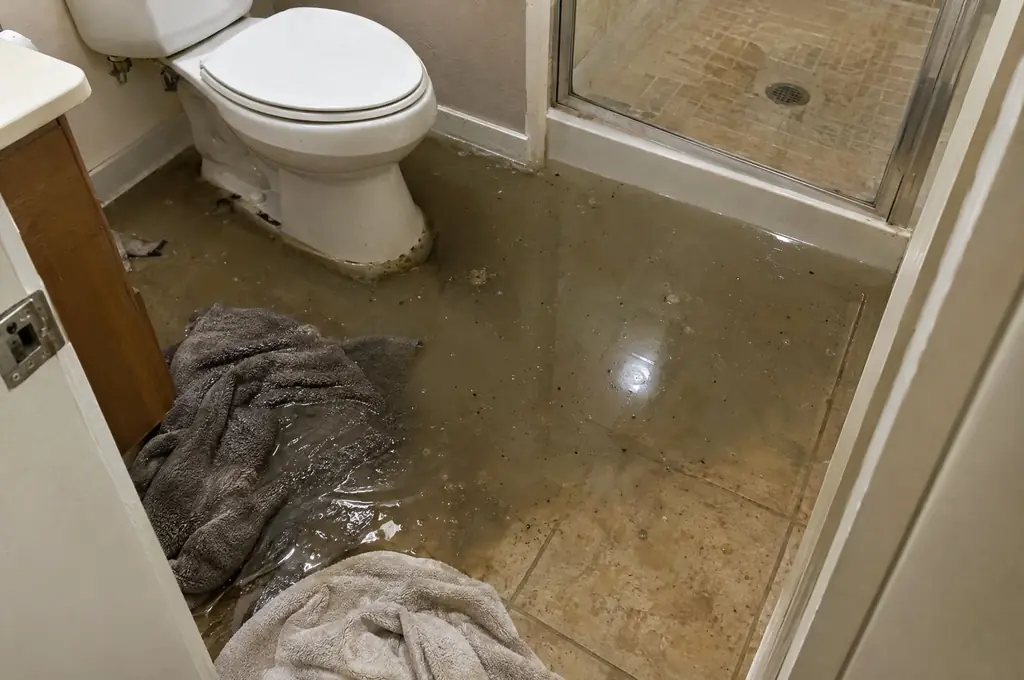
The City names roots and cooking grease as the main causes of both public sewer spills and spills from private laterals. Its own count fell from 365 spills in 2000 to 36 in 2020 after years of sewer upgrades, but a homeowner's lateral is still the homeowner's.
Right now
- 1Stop using every sink, tub, toilet, the dishwasher and the washer.
- 2Close off the rooms with sewage and keep kids and pets out of them.
- 3Call 619-515-3525 if sewage is coming out of a manhole or cleanout outside, or if neighbors have the same problem.
- 4Don't use a household vacuum or fan on sewage.
- 5Photograph the rooms, then wash any skin that touched the water.
San Diego facts for this problem
San Diego property owners maintain the sewer lateral from the house all the way to the City main, even when the connection sits in the street, an easement or a canyon.
Source: City of San Diego: Your Meter, Water Pressure and Plumbing System.
If a plumber finds a break past the property line, the plumber files a Plumber's Report on 619-515-3525 and the City investigates within 24 hours.
Source: City of San Diego: Your Meter, Water Pressure and Plumbing System.
The City names roots and cooking grease as the main causes of both public sewer spills and spills from private laterals.
Source: City of San Diego: Your Meter, Water Pressure and Plumbing System.
San Diego's sewer spills fell from 365 in 2000 to 41 in 2010 and 36 in 2020, the Public Utilities Department reports.
The City asks anyone who sees, smells or suspects a sewer spill to call 619-515-3525 right away.
The City's water and sewer line, 619-515-3525, takes sewer spills at any hour. The lateral from the house to the main is the owner's to maintain, and if a plumber finds a break past the property line, the plumber files a report on that line and the City investigates within 24 hours.
Sources: City of San Diego: Sewer Spill Reduction; City of San Diego: Your Meter, Water Pressure and Plumbing System
Related on this site: the printable first-hour sheet for the City's 24-hour water and sewer line, and the San Diego rainfall totals for how much rain fell this week.
The job, step by step
Stop the source
A plumber clears the lateral or the City checks the main.
Your part: Keep water off until the line is clear.
Remove
Sewage-soaked carpet, pad, drywall and insulation are removed and bagged.
Your part: Decide what belongings to keep, from a written list.
Clean and disinfect
Hard surfaces and framing are cleaned and treated.
Your part: Stay out until cleaning is done.
Dry
Equipment runs with daily readings until materials are dry.
Your part: Ask for the readings.
Repair
Rebuild after drying; jobs of $1,000 or more need a CSLB-licensed contractor.
Your part: Check the license before signing.
How insurance usually treats it
Coverage for sewage that backs up through a drain depends on your policy's wording. The California Department of Insurance lists sudden and accidental water damage among commonly covered perils and leaks and seepage among common exclusions, so read the declarations page and endorsements for your own answer.
General information, not insurance advice; the policy itself decides. More on the California water damage insurance page.
What changes the size of the job
- The reach of the sewage and the hours it sat before cleanup
- Which materials must be removed
- Cleaning and disinfection
- Drying days and equipment
- Repairs after drying
No prices on this site. A company measures moisture on site and writes an itemized estimate; the water damage estimator lists what that estimate should include.
Questions people ask about sewage backup cleanup
Who is responsible for the sewer lateral in San Diego?
The property owner, from the house all the way to the connection with the City main, whether that connection is in the street, an easement or a canyon. If a plumber finds a break past the property line, the plumber reports it on 619-515-3525 and the City investigates within 24 hours.
What causes sewer backups in San Diego homes?
The City says roots and cooking grease cause most spills from private laterals, as they do in the public system. It asks residents never to pour grease down drains and to plant trees away from the lateral.
Is sewage water dangerous to clean up myself?
Sewage is Category 3 water under the IICRC S500 standard because it carries bacteria and other contaminants. Wet porous materials it soaked are usually removed, not dried.